
Solar panels on boats: more sustainable and efficient navigation
Solar energy has come to the sea to stay.
In a world where sustainability and energy efficiency are becoming increasingly important, more and more boat owners are choosing to integrate solar panels into their boats.
This technology not only reduces dependence on the engine or generator, but also increases range and comfort on board, especially during extended periods at anchor.
WHY INSTALL SOLAR PANELS ON A BOAT?
The sun is an inexhaustible source of energy, especially in the Mediterranean.
The use of solar panels allows you to take advantage of it:
- Reduce fuel consumption.
- Reduce your environmental impact.
- Quietly power on-board electrical systems.
- Increase anchorage time without starting generators.
Best of all, they blend discreetly into the aesthetics of the boat, without compromising design or functionality.
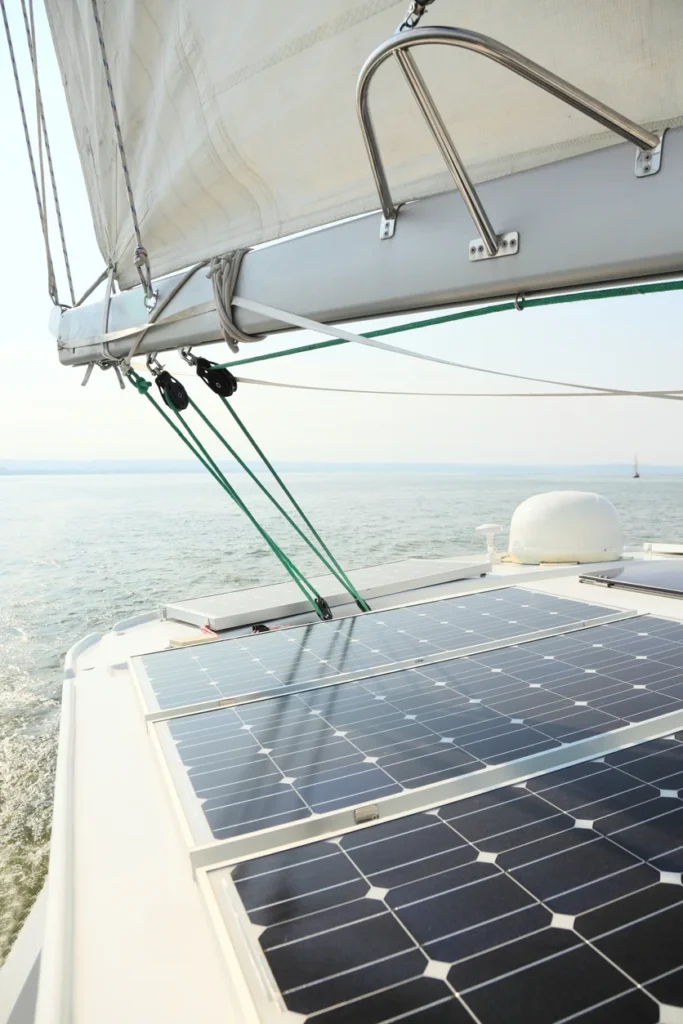
HOW DO SOLAR PANELS WORK ON A BOAT?
Solar panels capture sunlight and convert it into electrical energy through photovoltaic cells. This energy is stored in service batteries, which power a variety of onboard systems, from lighting and refrigeration to electronics, water pumps and USB chargers.
In recent years, the efficiency of solar panels has improved significantly:
- Modern monocrystalline panels achieve efficiency levels of 19-23%.
- They can be integrated into ceilings, rigid decks or even flexible surfaces without compromising the aesthetics of the boat.
- Maintenance is minimal and their useful life can exceed 25 years with proper care.
What factors should be taken into account?
ADVANTAGES
- Energy autonomy: ideal for long anchorages without depending on the generator or engine.
- Reduced fuel consumption: fewer engine operating hours mean lower costs and lower emissions.
- Total silence: a key advantage for those seeking peace and quiet on board.
- Low maintenance: with no moving parts, the panels only require occasional cleaning.
- Sustainability: lower environmental impact and greater energy efficiency.
DISADVANTAGES
- Limited production: The amount of energy depends on the available surface, orientation and weather conditions.
- Initial cost: Although increasingly affordable, installation may require a medium to high initial investment.
- Power management requirement: It is recommended to be used in conjunction with MPPT regulators and quality batteries to maximize performance.